What EPA certification actually means
Most of the housing stock in New York City, including a large share of buildings in the Bronx and across the five boroughs, was built before 1978, the year the federal government banned lead based residential paint. Under the EPA's Renovation, Repair and Painting rule, any contractor who disturbs painted surfaces in a pre-1978 home or building, whether that is scraping old paint, cutting into a wall, or sanding trim, is required to follow specific lead safe work practices and to be certified to do so. That is what our EPA certification covers: the training and practices needed to disturb old painted surfaces without spreading lead dust through a home, a hallway or a job site.
This is not a formality that only matters on paper. Scraping or sanding old paint the wrong way can send lead dust into the air and settle it on floors, sills and furniture, in a home where people, and often children, are living day to day. Following the EPA's containment and cleanup steps, plastic sheeting over work areas, wet sanding instead of dry sanding, proper cleanup and disposal, is what keeps that from happening. It is also why this matters just as much on a plaster and drywall repair job as it does on a painting job, since patching a cracked wall or ceiling in an older building can disturb the same old paint layers underneath.
What OSHA certification covers
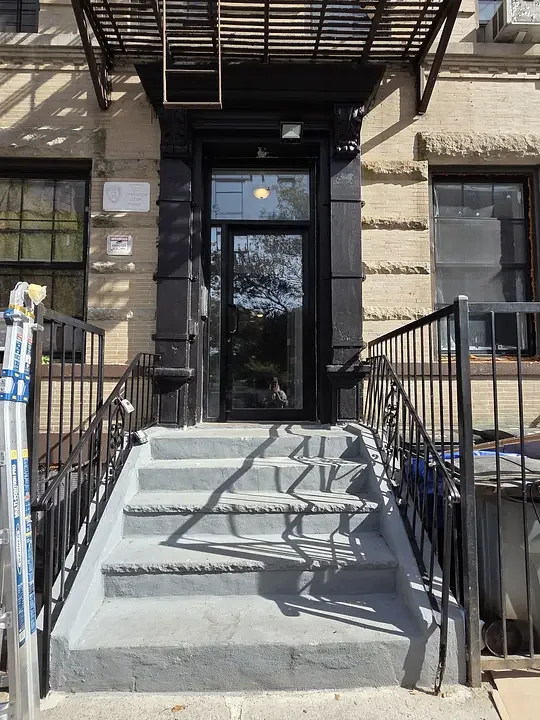
OSHA certification is a separate piece, focused on job site safety rather than lead specifically. It covers how a crew works safely around ladders, scaffolding, exterior heights, power tools and the day to day hazards of a painting or repair job, on both commercial and residential properties. Between the two certifications, EPA covers what happens to the surfaces and dust on the job, and OSHA covers how the crew itself works safely while getting the job done, on everything from a Bronx stoop to a full building exterior.
Why this matters more in a city like New York
New York's mix of prewar co-ops, walk-ups, brownstones and rowhouses means a lot of the buildings painting and plaster crews work on every week fall right into that pre-1978 category. A contractor who is not actually trained and certified for that work is not just cutting a corner, they are working on a surface with a real, well documented health risk without the practices in place to handle it safely. That is a reasonable thing to ask about before anyone starts scraping, sanding or patching a wall in your home or building.
What to ask before hiring
A few questions are worth asking any painting or plaster repair contractor in New York before they start: are you EPA certified for lead safe work practices, are you OSHA certified for job site safety, and will someone come look at the actual job in person before giving a price. Prime Finish Group is EPA certified and OSHA certified, and we send someone to see the job before quoting rather than pricing blind over the phone. We have been doing hands on painting and plaster repair work since 2020, on both commercial and residential properties, and our crew is reachable Monday through Friday, 7:00am to 8:00pm, at (929) 839-1333.
Where we work
We are based in the Bronx and take painting and plaster repair jobs in Riverdale in the Bronx, Yonkers in Westchester, Hempstead and Malverne on Long Island, and Philadelphia and Chestnut Hill in Pennsylvania. Older buildings make up a large share of the housing stock across those areas, from prewar apartment buildings to Philadelphia rowhouses and historic stone homes, which is exactly why we treat EPA and OSHA certification as a baseline requirement for our crew rather than an extra. If you have a painting or plaster repair job coming up, whether it is one room or a full building exterior, certification is one of the first things worth confirming before work starts.